
Welcome to the April 2026 edition of Arabica by NCCAR, highlighting NCCAR’s work across community engagement, policy advocacy, cultural diplomacy, and reflections on key developments shaping Canada–Arab community initiatives, organizational updates, and analysis on key regional developments.
Community Highlights
Since 1986: A Legacy of Advocacy, A Future of Impact
Since its founding in 1986, the National Council on Canada-Arab Relations (NCCAR) has stood as a national voice for Arab Canadians and a bridge between Canada and the Arab world.
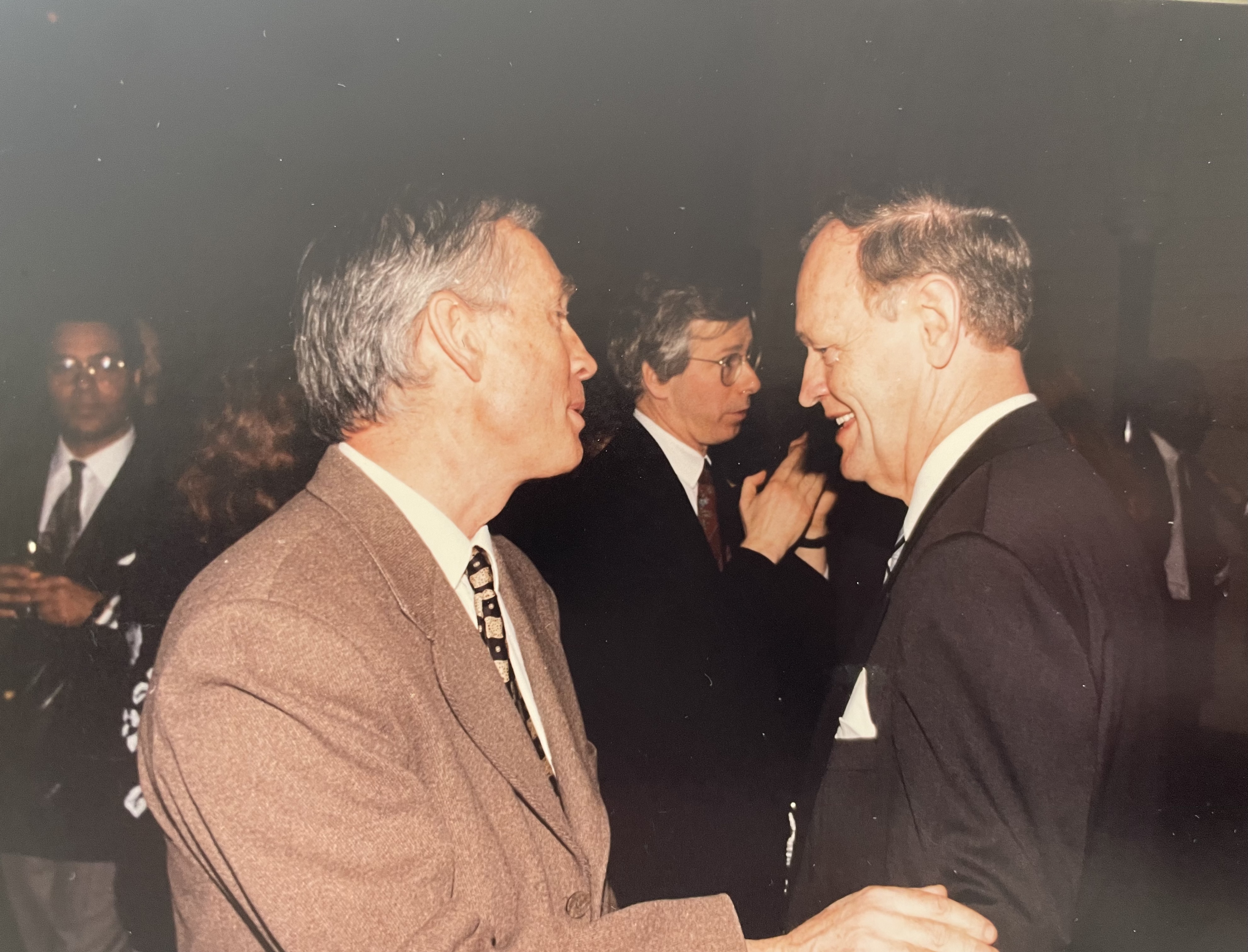
Established by former Member of Parliament Ian Watson, NCCAR was created to strengthen Canada–Arab relations and promote informed dialogue on public policy, culture, and international engagement. Three years after his passing in April 2023, this edition of the Arabica Newsletter is dedicated to his memory and the enduring legacy of public service and bridge-building he helped establish. In recognition of his contributions, NCCAR Chair Mr. Eli El Chantiry will host a memorial dinner in his honour, with further details to be announced in May.
Over nearly four decades, NCCAR has remained committed to three core pillars: advocacy, education, and connection.
Through policy engagement, public dialogue, and community outreach, the organization has worked to ensure Arab perspectives are meaningfully represented in Canadian discourse. Its educational efforts have challenged stereotypes and expanded understanding of Arab histories and contributions. Its role as a connector has linked communities, institutions, and governments across cultural and political lines.
Today, NCCAR continues to evolve, building on this legacy while responding to new global realities and community needs.
Recognition in Progress
Arab Heritage Month: When Recognition Is Still in Progress
As April comes to a close, it leaves behind an important reflection: recognition does not automatically follow intention.
April is observed by many communities as Arab Heritage Month in Canada, yet this year it passed without the formal national recognition many had anticipated. With the legislative process still underway and the bill requiring further approval before becoming law, the month was marked more quietly than in previous years of growing community momentum.
This is not a statement of absence, but of transition.
Arab Heritage Month was created to acknowledge the presence, history, and contributions of Arab Canadians within the broader national story. In recent years, it has grown through community-led initiatives, school programming, cultural events, and public engagement. However, formal recognition at the federal level remains in progress as the proposed legislation continues its path toward potential assent.
The importance of this initiative goes beyond a calendar designation. It speaks to visibility and inclusion—how communities are seen, understood, and reflected within national narratives.
Arab Canadians have long contributed to Canada’s development across many fields, including healthcare, education, public service, business, science, arts, and community leadership. These contributions are not new, but their recognition is still evolving in public space.
When recognition is consistent, it strengthens belonging. When it is absent or uneven, it can reinforce invisibility even where contribution is longstanding.
This is why Arab Heritage Month matters—not only as a moment of celebration, but as a step toward more sustained and structural acknowledgment.
As the legislative process continues, there remains a clear opportunity to ensure that Arab Heritage Month becomes a permanent and nationally recognized part of Canada’s cultural calendar. Until then, its meaning is carried forward by communities who continue to tell their stories, preserve their heritage, and advocate for inclusion.
April may end, but the conversation around recognition is still very much ongoing.
Policy & Government Engagement
NCCAR Engagement with IRCC: Immigration Policy and Humanitarian Response
NCCAR recently met with Immigration, Refugees and Citizenship Canada (IRCC) to present a set of practical immigration facilitation recommendations in response to the evolving situation in Lebanon and ongoing challenges facing students from Gaza.
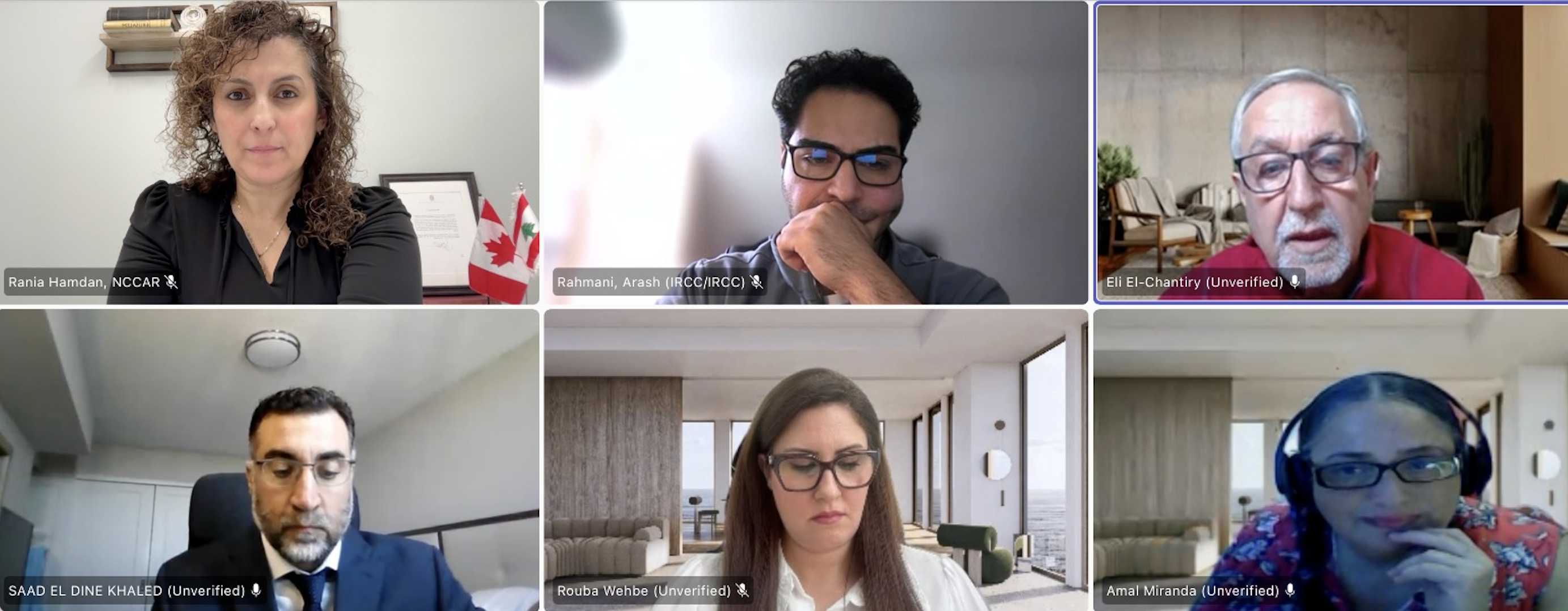
The delegation brought forward targeted, solutions-oriented proposals grounded in existing IRCC policy tools, emphasizing that no new legislation is required to implement meaningful change.
Key recommendations included:
- Expedited family reunification processing for immediate family members
- Temporary status extensions for Lebanese nationals unable to return safely
- Priority processing for Lebanese students with confirmed Canadian university admissions
- Flexible humanitarian facilitation measures, including fee waivers and documentation flexibility
A significant focus of the discussion was the situation of over 130 students from Gaza who have been accepted to Canadian universities but remain unable to begin their studies due to logistical and procedural barriers, including biometric access limitations and border restrictions.
NCCAR also raised broader community concerns, including long processing delays, visa refusals, and uncertainty affecting families seeking reunification and stability.
IRCC acknowledged the presentation and confirmed that the recommendations will be brought forward for further internal consideration. The department also reiterated that existing mechanisms remain available, while recognizing that certain challenges require broader governmental coordination.
NCCAR remains committed to constructive engagement with government partners to advance timely, compassionate, and practical immigration solutions within Canada’s existing legal frameworks.
Global Culture & Sport Diplomacy
Arab Football on the Global Stage: World Cup 2026 and Canada–Arab Connections
 The upcoming FIFA World Cup 2026, to be hosted across Canada, the United States, and Mexico, represents a major global sporting milestone—and a unique opportunity to strengthen cultural and diplomatic ties between Canada and Arab states.
This edition of the tournament marks a historic moment for Arab football. Jordan has qualified for the FIFA World Cup for the first time in its history, while Iraq continues its competitive qualification journey, reflecting the growing strength and visibility of Arab national teams on the world stage.
These developments highlight football’s role as more than sport—it is a powerful cultural force that connects communities, identities, and nations across borders.
With Canada playing a central role as one of the host countries, the tournament also creates an important platform for strengthening Canada–Arab relations through sport, culture, and people-to-people engagement. Arab diaspora communities across Canada are expected to play a significant role in shaping the cultural atmosphere of the event.
Discussions with international sports and communication experts, including Walid Bouchenafa, have explored how global sporting events can serve as tools for cultural diplomacy, youth engagement, and international cooperation.
As the world prepares for the World Cup, NCCAR will continue to highlight the role of Arab communities in global sport and explore opportunities to connect culture, identity, and international engagement in meaningful ways.
NCCAR remains committed to building bridges—between communities, between nations, and across generations.

Join NCCAR and shape the next chapter of Arab-Canadian leadership and community impact. Whether through membership, donations, or volunteering. Every contribution strengthens our mission to build bridges, foster civic engagement, and create lasting opportunities for generations to come.Get involved today and be part of the change.NCCAR is a not-for-profit charitable organization based in Ottawa, dedicated to promoting understanding and awareness of the cultural, historical, and socio-economic realities of the Arab world. Your support is vital—donate today and help us continue our work for positive impact.
For more information about NCCAR and our upcoming events, visit www.nccar.ca.
Media inquiries: [email protected].
Follow us on Facebook, Instagram, linkedin and X to stay connected.