Arabica by NCCAR - April 2026

Welcome to the April 2026 edition of Arabica by NCCAR, highlighting NCCAR’s work across community engagement, policy advocacy, cultural diplomacy, and reflections on key developments shaping Canada–Arab community initiatives, organizational updates, and analysis on key regional developments.
Community Highlights
Since 1986: A Legacy of Advocacy, A Future of Impact
Since its founding in 1986, the National Council on Canada-Arab Relations (NCCAR) has stood as a national voice for Arab Canadians and a bridge between Canada and the Arab world.
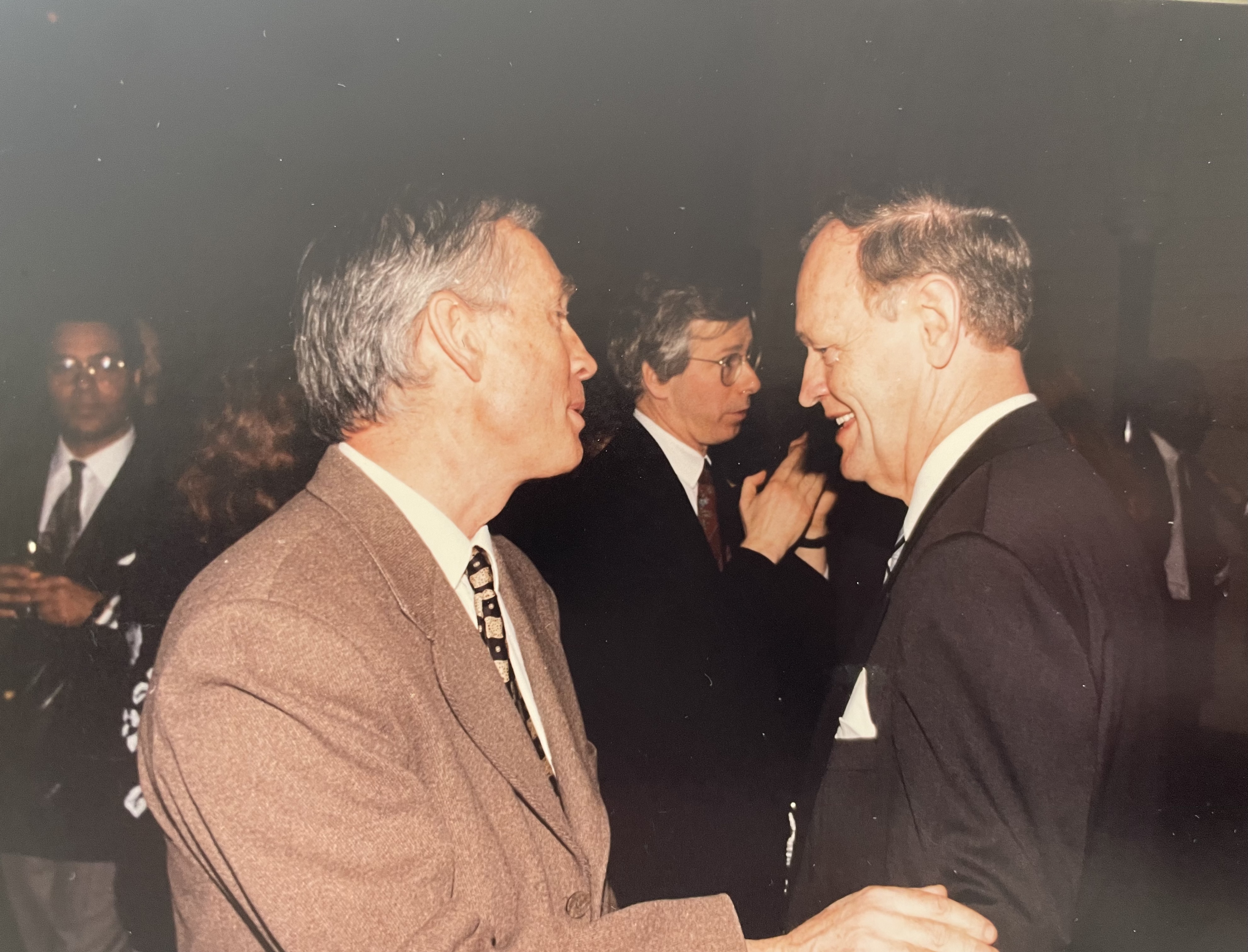
Established by former Member of Parliament Ian Watson, NCCAR was created to strengthen Canada–Arab relations and promote informed dialogue on public policy, culture, and international engagement. Three years after his passing in April 2023, this edition of the Arabica Newsletter is dedicated to his memory and the enduring legacy of public service and bridge-building he helped establish. In recognition of his contributions, NCCAR Chair Mr. Eli El Chantiry will host a memorial dinner in his honour, with further details to be announced in May.
Over nearly four decades, NCCAR has remained committed to three core pillars: advocacy, education, and connection.
Through policy engagement, public dialogue, and community outreach, the organization has worked to ensure Arab perspectives are meaningfully represented in Canadian discourse. Its educational efforts have challenged stereotypes and expanded understanding of Arab histories and contributions. Its role as a connector has linked communities, institutions, and governments across cultural and political lines.
Today, NCCAR continues to evolve, building on this legacy while responding to new global realities and community needs.
Recognition in Progress
Arab Heritage Month: When Recognition Is Still in Progress
As April comes to a close, it leaves behind an important reflection: recognition does not automatically follow intention.
April is observed by many communities as Arab Heritage Month in Canada, yet this year it passed without the formal national recognition many had anticipated. With the legislative process still underway and the bill requiring further approval before becoming law, the month was marked more quietly than in previous years of growing community momentum.
This is not a statement of absence, but of transition.
Arab Heritage Month was created to acknowledge the presence, history, and contributions of Arab Canadians within the broader national story. In recent years, it has grown through community-led initiatives, school programming, cultural events, and public engagement. However, formal recognition at the federal level remains in progress as the proposed legislation continues its path toward potential assent.
The importance of this initiative goes beyond a calendar designation. It speaks to visibility and inclusion—how communities are seen, understood, and reflected within national narratives.
Arab Canadians have long contributed to Canada’s development across many fields, including healthcare, education, public service, business, science, arts, and community leadership. These contributions are not new, but their recognition is still evolving in public space.
When recognition is consistent, it strengthens belonging. When it is absent or uneven, it can reinforce invisibility even where contribution is longstanding.
This is why Arab Heritage Month matters—not only as a moment of celebration, but as a step toward more sustained and structural acknowledgment.
As the legislative process continues, there remains a clear opportunity to ensure that Arab Heritage Month becomes a permanent and nationally recognized part of Canada’s cultural calendar. Until then, its meaning is carried forward by communities who continue to tell their stories, preserve their heritage, and advocate for inclusion.
April may end, but the conversation around recognition is still very much ongoing.
Policy & Government Engagement
NCCAR Engagement with IRCC: Immigration Policy and Humanitarian Response
NCCAR recently met with Immigration, Refugees and Citizenship Canada (IRCC) to present a set of practical immigration facilitation recommendations in response to the evolving situation in Lebanon and ongoing challenges facing students from Gaza.
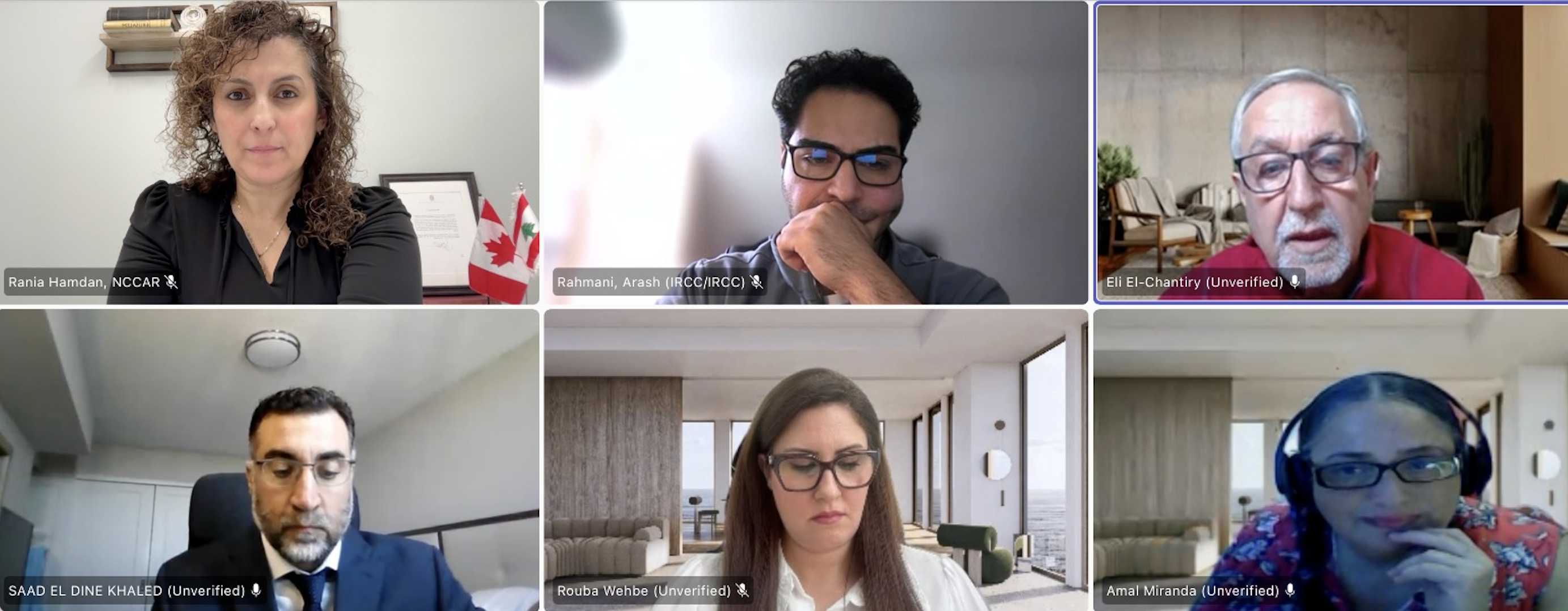
The delegation brought forward targeted, solutions-oriented proposals grounded in existing IRCC policy tools, emphasizing that no new legislation is required to implement meaningful change.
Key recommendations included:
- Expedited family reunification processing for immediate family members
- Temporary status extensions for Lebanese nationals unable to return safely
- Priority processing for Lebanese students with confirmed Canadian university admissions
- Flexible humanitarian facilitation measures, including fee waivers and documentation flexibility
A significant focus of the discussion was the situation of over 130 students from Gaza who have been accepted to Canadian universities but remain unable to begin their studies due to logistical and procedural barriers, including biometric access limitations and border restrictions.
NCCAR also raised broader community concerns, including long processing delays, visa refusals, and uncertainty affecting families seeking reunification and stability.
IRCC acknowledged the presentation and confirmed that the recommendations will be brought forward for further internal consideration. The department also reiterated that existing mechanisms remain available, while recognizing that certain challenges require broader governmental coordination.
NCCAR remains committed to constructive engagement with government partners to advance timely, compassionate, and practical immigration solutions within Canada’s existing legal frameworks.
Global Culture & Sport Diplomacy
Arab Football on the Global Stage: World Cup 2026 and Canada–Arab Connections
 The upcoming FIFA World Cup 2026, to be hosted across Canada, the United States, and Mexico, represents a major global sporting milestone—and a unique opportunity to strengthen cultural and diplomatic ties between Canada and Arab states.
This edition of the tournament marks a historic moment for Arab football. Jordan has qualified for the FIFA World Cup for the first time in its history, while Iraq continues its competitive qualification journey, reflecting the growing strength and visibility of Arab national teams on the world stage.
These developments highlight football’s role as more than sport—it is a powerful cultural force that connects communities, identities, and nations across borders.
With Canada playing a central role as one of the host countries, the tournament also creates an important platform for strengthening Canada–Arab relations through sport, culture, and people-to-people engagement. Arab diaspora communities across Canada are expected to play a significant role in shaping the cultural atmosphere of the event.
Discussions with international sports and communication experts, including Walid Bouchenafa, have explored how global sporting events can serve as tools for cultural diplomacy, youth engagement, and international cooperation.
As the world prepares for the World Cup, NCCAR will continue to highlight the role of Arab communities in global sport and explore opportunities to connect culture, identity, and international engagement in meaningful ways.
NCCAR remains committed to building bridges—between communities, between nations, and across generations.

Join NCCAR and shape the next chapter of Arab-Canadian leadership and community impact. Whether through membership, donations, or volunteering. Every contribution strengthens our mission to build bridges, foster civic engagement, and create lasting opportunities for generations to come.Get involved today and be part of the change.NCCAR is a not-for-profit charitable organization based in Ottawa, dedicated to promoting understanding and awareness of the cultural, historical, and socio-economic realities of the Arab world. Your support is vital—donate today and help us continue our work for positive impact.
For more information about NCCAR and our upcoming events, visit www.nccar.ca.
Media inquiries: [email protected].
Follow us on Facebook, Instagram, linkedin and X to stay connected.
Arabica by NCCAR - March 2026

Welcome to the March 2026 edition of Arabica by NCCAR, highlighting community initiatives, organizational updates, and analysis on key regional developments.
Community Highlights
NCCAR Community Iftar & Fundraiser: A Successful Evening of Mobilization and Solidarity
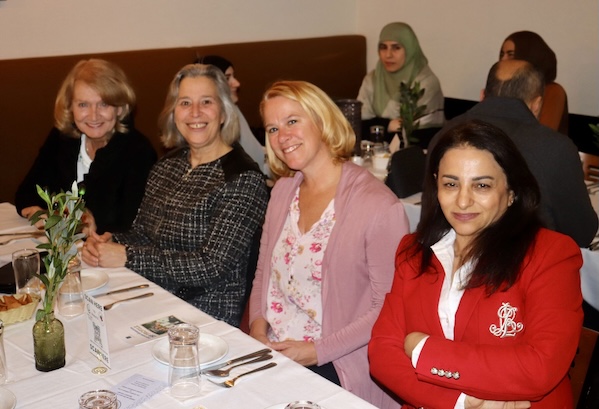
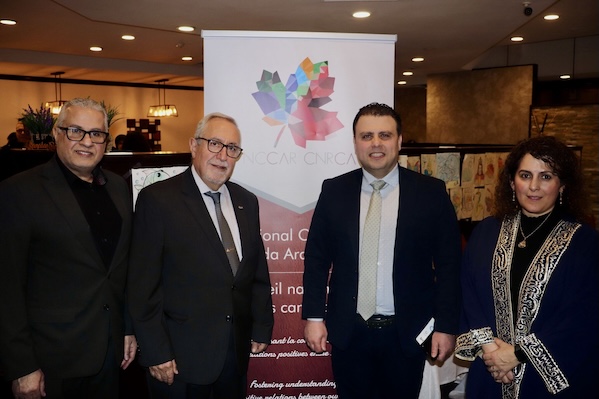
The NCCAR Community Iftar & Fundraiser, held on Monday March 16, as part of our Dardachat Series, brought together community leaders, members, and partners for an evening dedicated to mobilization, knowledge sharing, networking, and fundraising. The event successfully gathered key actors from across our community, creating a meaningful space for dialogue, collaboration, and collective action in response to the current challenges facing the MENA region.
The evening served not only as an opportunity to connect and reflect, but also to raise funds for organizations working directly on the ground. We were proud to support initiatives including Sadr Foundation Canada, The Eternal Companion, and Momken, whose efforts provide essential humanitarian and educational assistance to communities in need. The strong turnout and engagement demonstrated our community’s commitment to working with a united front and strengthening coordinated responses.
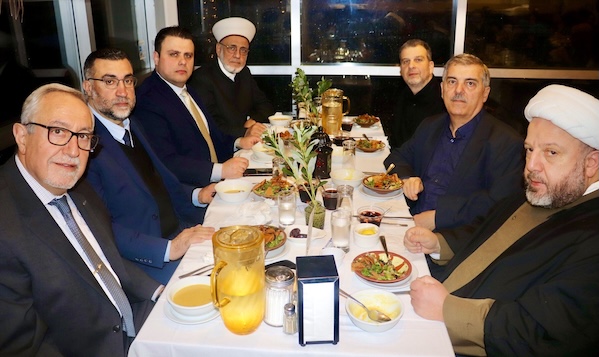 Thank you to everyone who joined us. It was truly an honour to share such a meaningful evening—one filled with community, reflection, and solidarity. Your presence made the event incredibly special, and we are deeply grateful for your support. Stay tuned for our April Dardachat event which will be announced in the next few days.
We are pleased to share that photos from the evening are now available. You can view and download your favourite moments through the link below.
As part of this initiative, you are invited to contribute on a pay-what-you-canbasis, with all proceeds supporting NCCAR’s ongoing work.
We would also like to extend a special thank you to our talented photographer, Kassem Harb of Lahza Photography, for beautifully capturing these memorable moments. Mr. Harb has generously offered to donate all proceeds from photo contributions to NCCAR.
We are equally grateful to our dedicated volunteers, whose time and effort were instrumental in making the evening a success.
To continue supporting impactful organizations working tirelessly on the ground, we invite you to visit: https://linktr.ee/theNCCAR
Access the online album.
NCCAR Statement
NCCAR Congratulates New Leadership of the New Democratic Party of Canada

Ottawa — The National Council on Canada-Arab Relations (NCCAR) congratulates Avi Lewis on his election as Leader of the New Democratic Party of Canada. This milestone reflects strong engagement from party members and a growing emphasis on human rights and international humanitarian issues within Canada’s political discourse.
NCCAR also congratulates Libby Davies on her election as Vice President of the NDP, and Niall Ricardo on his election as President. Their leadership signals an opportunity for meaningful dialogue on international law, peace, and justice.
NCCAR remains a non-partisan organization committed to engaging constructively with all political parties. We look forward to working collaboratively to advance humanitarian priorities and address critical human issues affecting the peoples of the Arab world.
We encourage continued dialogue and principled leadership that reflects the values of human dignity, accountability, and respect for international law.
NCCAR offers sincere condolences to Avi Lewis on the passing of his father on March 31, just one day after his election. Our thoughts are with him and his family during this difficult time.
Opinion & Analysis
The Global Economic Risks of the Gulf War between the U.S., Israel, and Iran
Opinion published in the Hamilton Spectator by Dr. Atif Kubursi - McMaster University
March 31, 2026
Wars in the Middle East rarely remain regional events. Their consequences quickly spill beyond borders, disrupting energy markets, financial systems, and geopolitical alliances. The current war directly involving the United States, Israel, and Iran is no exception. What began as three countries at war became a regional conflict as most of the Gulf Cooperation Council countries were dragged into it, then Lebanon joined, Iraq was involved and now Yemen. The war is no longer regional; it is now, by any standard, a global war rapidly triggering global economic and strategic consequences far beyond the Gulf and the Middle East.
The most immediate risk lies in global energy markets. Energy costs feed directly into transportation, manufacturing, agriculture, and nearly every other sector of the global economy. The Gulf region remains the center of the world’s oil supply, holding nearly half of the world’s proven reserves and producing a substantial share of global output. Saudi Arabia, Iraq, the United Arab Emirates, Iran, and Kuwait together produce more than 30 million barrels of oil per day — roughly one-third of global production.
Even more critical is the Strait of Hormuz. More than a quarter of the world’s seaborne oil trade and over a fifth of total oil consumption pass through this narrow waterway between Iran and Oman. Oil is not the only critical commodity that passes through, as LNG, Natural Gas, Petrochemicals, Fertilizers, and Helium are also some of the critical products that are transported through this Strait. Yet, it is considered to be one of the most important energy chokepoints on earth. Any sustained disruption to shipping through the strait would remove millions of barrels of oil from the global market almost overnight.
History provides a clear warning about what such disruptions can do. The oil embargo of 1973 and the Iranian revolution of 1979 both produced severe global economic shocks. A prolonged closure or disruption of the Strait of Hormuz could produce an even larger shock, given the scale of modern global energy consumption.
In the short run, global oil demand is relatively insensitive to price increases. Economists describe this as “price-inelastic demand.” In practical terms, this means consumers cannot quickly stop driving, airlines cannot easily ground fleets, and industries cannot instantly replace petroleum inputs. When supply falls sharply, prices must therefore rise dramatically before demand adjusts.
Under such circumstances, oil prices could rise well beyond $100 per barrel and could theoretically approach $200 before markets stabilize. Oil prices in 1973 climbed to $147 a barrel in today’s prices. The current oil prices, pushing higher than $120 a barrel, are still below the real price levels in 1973. Whatever oil price level holds now, it is going to be pushed higher as the tensions last. But, even if such levels prove temporary, the economic consequences would be severe. There are already reasons and grounds to believe that a suspension of tensions may not result in a quick price response as the cumulative damages to production capacity in the region escalate, and as ships trapped are hit, and insurance claims remain high and crippling.
Inflation would almost certainly accelerate. Historically, a sustained $10 increase in oil prices has added roughly half a percentage point to inflation in many economies. If oil prices were to rise dramatically, households and businesses would face higher costs across the board. Disposable incomes of consumers and businesses would decline as fuel, energy and consumer goods and bills increase.
Higher energy prices would also weaken economic growth. Businesses would face rising production costs while consumers cut back on spending. As economic activity slows, unemployment would increase. The combination of rising inflation and slowing growth would create the conditions for a form of economic stress similar to the “stagflation” experienced during the 1970s oil crisis.
Financial markets would not remain immune. Geopolitical shocks typically trigger `capital flight` from emerging markets in the Global South as investors everywhere seek safer assets. Equity markets often become volatile, currencies depreciate, and borrowing costs rise. In a highly interconnected global financial system, instability in one region can quickly spread to others.
The current exceptionally chaotic geopolitical environment would make such a shock even more difficult to manage. The global economy is already facing trade tensions, having to deal with Trumpian erratic tariffs, supply-chain disruptions, and slowing growth in several regions. A major energy shock layered on top of these existing stresses could easily increase the probability of a global recession.
Another often overlooked consequence involves remittances. Millions of workers from countries such as Egypt, Pakistan, Lebanon, and various Asian economies are employed in many of the Gulf States and send large portions of their earnings home. At this time, expatriates in the Gulf from South Asia alone number over 21 million, a third of the total population of the GCC countries. Actually, the total expatriates in the Gulf Cooperation Countries (GCC) exceed 35 million, or 56.5% of the total population. In many developing countries, these remittances represent a crucial source of foreign exchange, sometimes exceeding their export earnings and household income. Middle Eastern countries remain a key source of remittances for South Asian nations such as India, Pakistan, Bangladesh, Sri Lanka and Nepal. The remittances these five countries receive from the region, $103bn, are comparable to Oman’s total Gross Domestic Product (GDP).
Just the remittances that India receives from the Gulf, $50bn, are more than Bahrain’s entire GDP. Pakistan receives $38.3bn in remittances, Bangladesh $13.5bn, Sri Lanka $8bn, and Nepal $5bn.
If conflict disrupts economic activity in the Gulf — particularly, if oil exports are curtailed — migrant workers could lose jobs or see incomes decline. Reduced remittances would create further economic stress in many already fragile and highly indebted economies.
Trade flows could also be affected. Gulf economies import hundreds of billions of dollars in goods each year ($740 billion in 2024). A decline in oil revenues would likely reduce their ability to import goods from the rest of the world, affecting exporters in the Middle East, Asia, Europe, and North America.
The environmental and infrastructure consequences of war in the Gulf could also be severe. Several Gulf countries rely heavily on energy-intensive desalination plants for fresh water. Damage to energy facilities or supply disruptions could threaten water security across the region. Industrial fires, damaged infrastructure, and pollution from military activity could also create long-term environmental costs. Already, Tehran has experienced a few days of black rain, Lebanon has reported that Israel is using Phosphorus bombs in South Lebanon and a few unconfirmed reports of the use of depleted Uranium bombs.
There is one possibly positive environmental consequence to this war, and that relates to the possible reduction of consumption of oil and fossil fuels and the potential for heightened incentives to use renewable energy sources. At this time, even this possibility is uncertain as few countries are restarting their coal-fired energy or resorting to nuclear energy.
Beyond these economic effects, the strategic consequences are equally potentially dire. A prolonged war could reshape alliances in the Middle East and alter the balance of power in the region. Countries that have long relied on external security guarantees may begin to reassess and re-evaluate those arrangements if conflict spreads or if security commitments appear uncertain. Already, the US is lashing out its criticisms of NATO.
At the same time, key global political institutions appear increasingly limited in their ability to prevent or resolve major conflicts. Diplomatic mechanisms that once helped contain regional wars are often reeling under relentless criticism from President Trump. This raises troubling questions about how quickly escalation could occur before meaningful international intervention takes place.
None of these outcomes is inevitable. Markets eventually adjust, supply chains adapt, and diplomacy can sometimes halt escalation before the worst scenarios unfold. But the risks are real. The longer a conflict involving the United States, Israel, Iran and now Lebanon persists, the greater the probability that its economic and strategic consequences will spread far beyond the Middle East.
For the global economy, the stakes could hardly be higher.
Dr. Atif Kubursi is President of Econometric Research Limited and Emeritus Professor of Economics at McMaster University. He previously taught at Purdue University, was a Visiting Scholar at Cambridge University, and served as Acting Executive Secretary and Under-Secretary-General of the United Nations Economic and Social Commission for Western Asia (2006–2008). Dr. Kubursi has consulted with numerous international organizations, including the World Bank, IMF, and several UN agencies. He holds a Ph.D. in Economics from Purdue University and a B.A. from the American University of Beirut, and served as President of the National Council on Canada-Arab Relations
Get Involved
Join NCCAR and shape the next chapter of Arab-Canadian leadership and community impact. Whether through membership, donations, or volunteering. Every contribution strengthens our mission to build bridges, foster civic engagement, and create lasting opportunities for generations to come.
Get involved today and be part of the change.
NCCAR is a not-for-profit charitable organization based in Ottawa, dedicated to promoting understanding and awareness of the cultural, historical, and socio-economic realities of the Arab world. Your support is vital—donate today and help us continue our work for positive impact.
For more information about NCCAR and our upcoming events, visit www.nccar.ca.
Media inquiries: [email protected].
Follow us on Facebook, Instagram, linkedin and X to stay connected.
Arabica by NCCAR - February 2026 newsletter
NCCAR Statement on Regional Escalation and the Need for Diplomacy
Ottawa - Amid rising regional tensions following recent military strikes, NCCAR reaffirms its commitment to international law, peaceful resolution, and the protection of civilian life.
The National Council on Canada-Arab Relations (NCCAR) is deeply concerned about the recent military escalation following strikes on Iran and subsequent regional tensions. This dangerous escalation jeopardizes international peace and security and risks dragging the world further into conflict.
We call on the Government of Canada to set aside political divisions and urgently support diplomatic efforts and peaceful de-escalation through the United Nations and other international forums. Military action threatens to further destabilize the region, increase the risk of wider conflict, and endanger civilian populations across the region.
As United Nations Secretary-General António Guterres stated:
“I condemn today’s military escalation … The use of force … undermines international peace and security.”“I call for an immediate cessation of hostilities and de-escalation … I strongly encourage all parties to return immediately to the negotiating table.”
Canada must stand firmly for diplomacy, the rule of international law, and a peaceful resolution that prevents further bloodshed and protects civilians everywhere.
NCCAR is a not-for-profit charitable organization based in Ottawa, dedicated to promoting understanding and awareness of the cultural, historical, and socio-economic realities of the Arab world. Your support is vital—donate today and help us continue our work for positive impact.
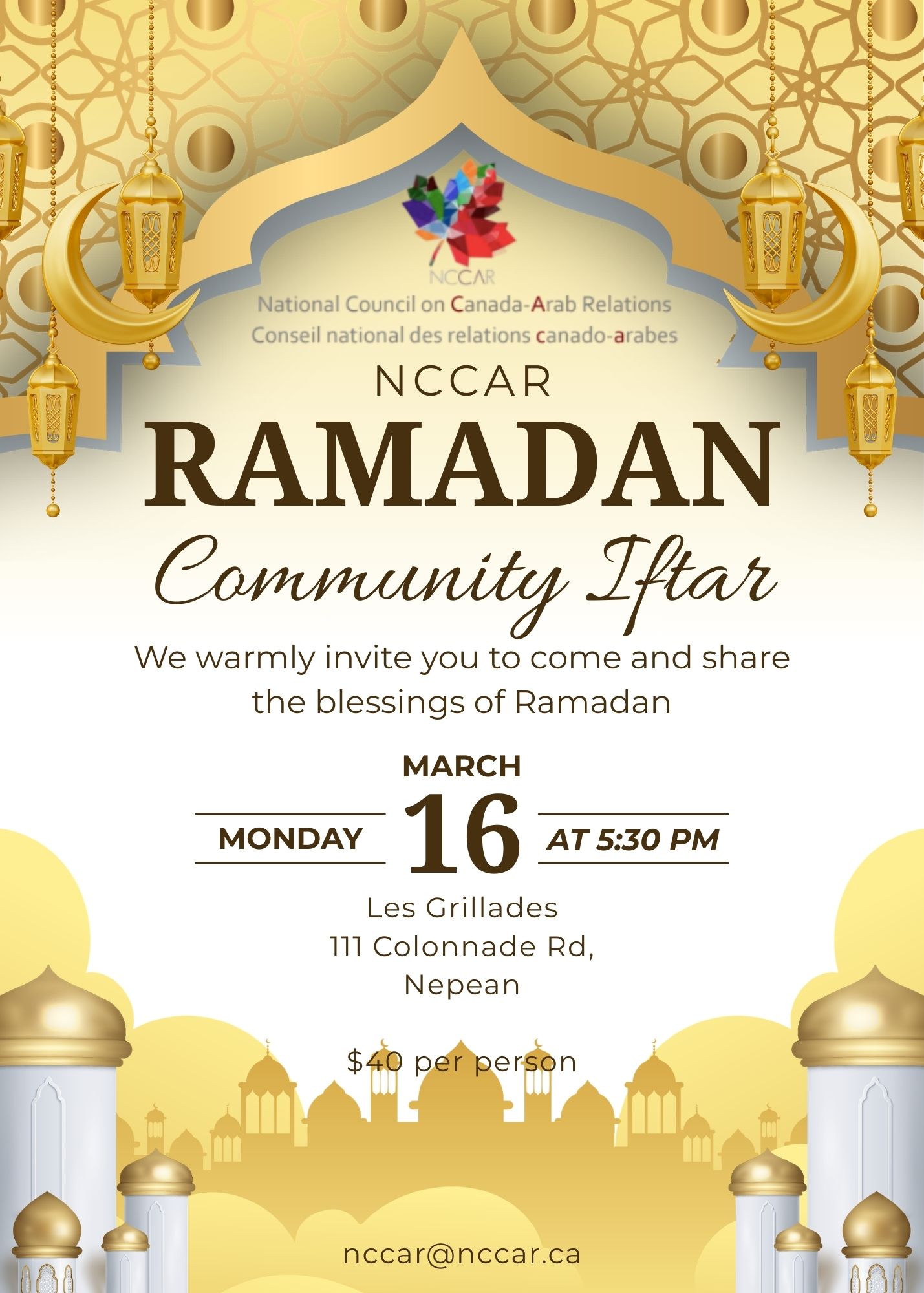
Community Iftar Dinner- March 16-2026
NCCAR will be hosting a Community Iftar Dinner on Monday, March 16, 2026, at Les Grillades (111 Colonnade Road, Nepean, Ottawa).
Held as part of NCCAR’s Dardachat series, this family-oriented gathering will provide an opportunity for community members to share a meal, reconnect, and strengthen relationships. The evening will include meaningful discussion about NCCAR’s outreach, priorities, and collective efforts, grounded in a spirit of unity and collaboration.
As the community gathers to break the fast during Ramadan, NCCAR also welcomes those observing Lent and members of our broader, diverse community. The evening reflects our shared commitment to inclusivity, dialogue, and building NCCAR’s future together.
Click here For Tickets and to RSVP
The Road to Federal Recognition, Bill S-227
Arab Heritage Month
The effort to formally recognize Arab Heritage Month at the federal level has been years in the making. Led by advocacy from the Canadian Arab Instituteand community partners across the country, the effort aims to officially designate April as Arab Heritage Month in Canada.
In February 2022, Member of Parliament David McGuinty introduced Bill C-232 in the House of Commons of Canada. The bill received unanimous support and later passed third reading. However, after advancing to the Senate of Canada, the legislation lapsed following the prorogation of Parliament in early 2025.
The initiative was reintroduced in June 2025 by Senator Mohammad Al Zaibakas Bill S-227. The bill has since passed the Senate and advanced to second reading in the House of Commons. It is currently under review by the Standing Committee on Canadian Heritage.
Working with the Community
NCCAR will be convening members, partners, and government representatives for a series of informed discussions examining the bill’s legislative pathway and its broader implications for the Arab Canadian community. These sessions will provide space to analyze the bill’s progress, understand its potential impact, and engage thoughtfully with Canada’s parliamentary process.
Further details will be shared in the coming weeks as we continue to follow the bill’s advancement.
Join NCCAR and shape the next chapter of Arab-Canadian leadership and community impact. Whether through membership, donations, or volunteering. Every contribution strengthens our mission to build bridges, foster civic engagement, and create lasting opportunities for generations to come.
Get involved today and be part of the change.
NCCAR is a not-for-profit charitable organization based in Ottawa, dedicated to promoting understanding and awareness of the cultural, historical, and socio-economic realities of the Arab world. Your support is vital—donate today and help us continue our work for positive impact.

For more information about NCCAR and our upcoming events,
visit www.nccar.ca. Media inquiries: [email protected]. Follow us onFacebook, Instagram, and Twitter @NCCAR_ to stay connected.
Arabica by NCCAR - January 2026 newsletter
January 2026
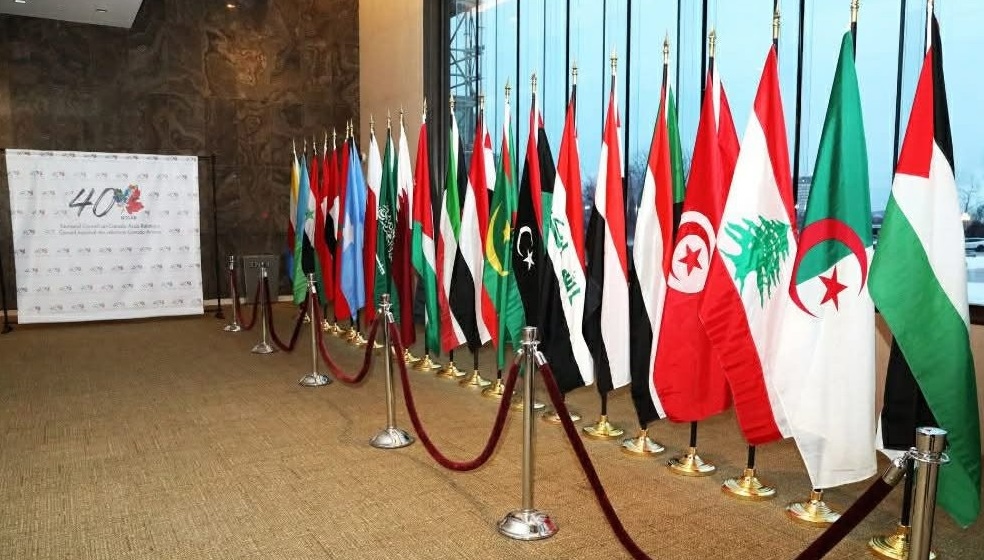
40 Years of Community Leadership & Civic Engagement.
On December 5, the National Council on Canada-Arab Relations (NCCAR) celebrated its 40th anniversary with a reception at the Canadian Parliament in Ottawa, under the theme “Building Bridges with the Past and Shaping the Future.”
 Sponsored by MP Jenna Sudds, the event brought together parliamentarians, diplomats, community leaders, academics, media professionals, and Arab-Canadian representatives from across Canada, showcasing NCCAR’s long-standing national presence and role as a convener.
The celebration highlighted the collective leadership of NCCAR’s Board of Directors, including Chair Eli El Chantiry, Vice Chair Elissar Sarrouh. President Rania Hamdan.
Speakers reflected on four decades of advancing dialogue, civic engagement, and youth leadership, emphasizing the importance of strong governance, collaboration, and accountability as NCCAR enters a new phase of organizational rebuilding and strategic growth.
 NCCAR representatives also highlighted the Council’s work in creating pathways for Arab-Canadian youth to engage with Canada’s democratic institutions, including parliamentary training programs that nurture informed civic leaders. Guests recognized the contributions of past and present board members, volunteers, and partners who have sustained NCCAR since its founding. The anniversary marked both a celebration of legacy and a renewed commitment to building durable institutions, expanding community engagement, and continuing to serve as a national platform for Arab-Canadians and allies dedicated to dialogue, equity, and public participation.
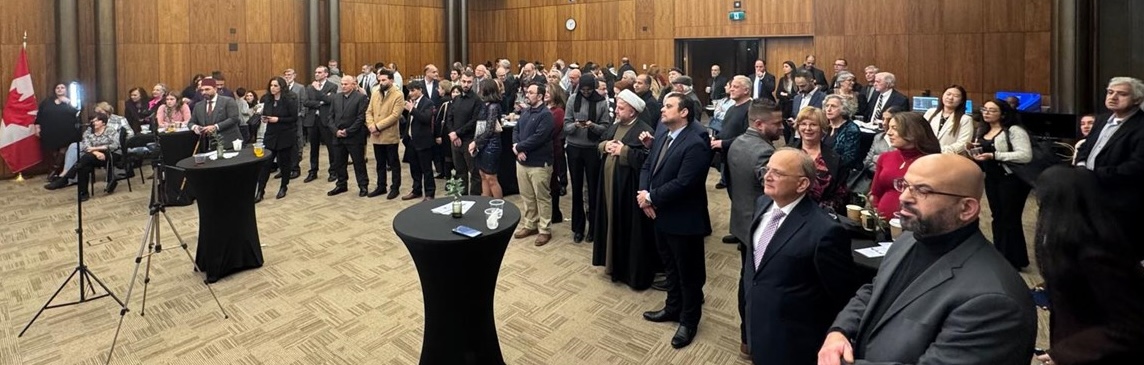
We extend our heartfelt gratitude to the volunteers, donors, and sponsors who make events like this possible. Your dedication, generosity, and support are the foundation of NCCAR’s work—without you, none of our programs, celebrations, or community initiatives could succeed. Each contribution, whether through time, resources, or partnership, helps us continue building bridges, empowering youth, and amplifying Arab-Canadian voices across Canada. Thank you for being an essential part of our journey.
Honoring Lebanese Heritage with the Lebanese Cultural Club
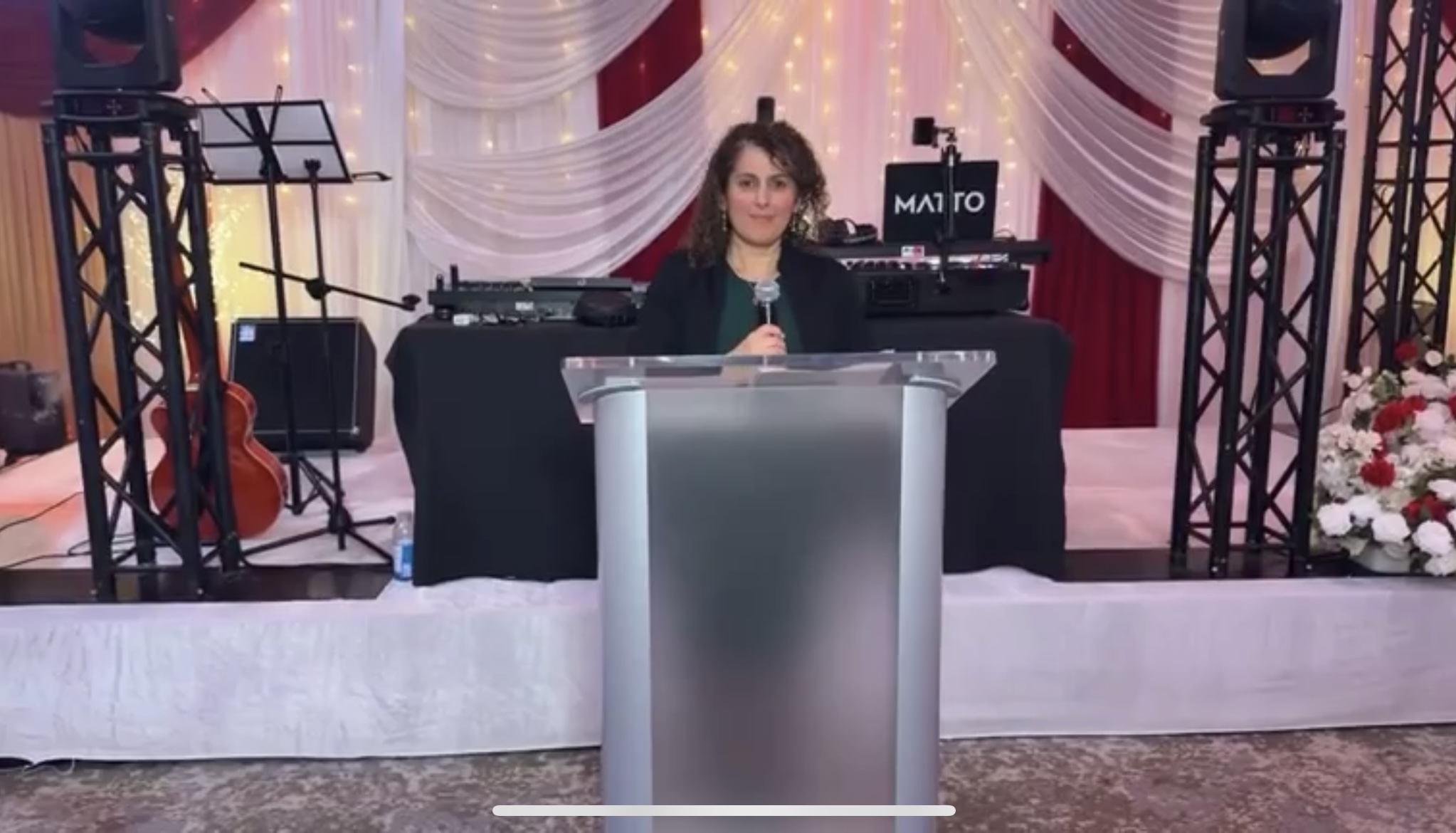
The Lebanese Cultural Club at the University of Ottawa recently hosted a special celebration of Lebanese heritage, bringing together students, faculty, and community members to honor the richness of Lebanese traditions.
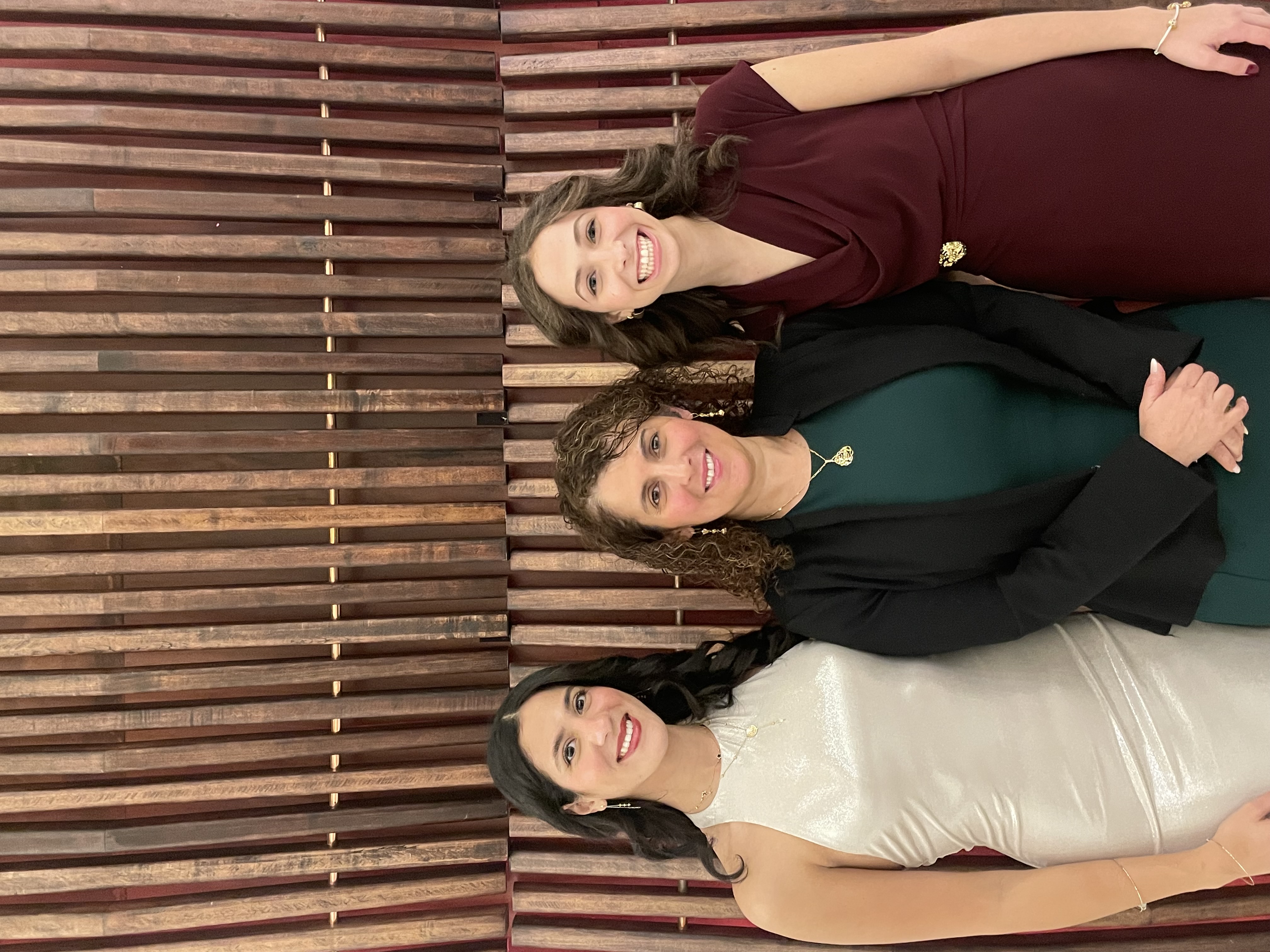
Guest speaker Rania Hamdan highlighted the importance of connecting with one’s roots while embracing diversity. “Lebanese culture is a tapestry woven with history, resilience, and creativity,” she said. “From our cuisine to our music, our art, and our traditions, every element tells a story of perseverance, family, and community.”
She also encouraged students to take an active role in preserving and sharing culture: “As members of the Lebanese Cultural Club, you are celebrating our heritage while building bridges between communities and shaping a future where diversity is celebrated.”
The gathering celebrated the values of generosity, hospitality, and unity, leaving attendees inspired to continue cherishing and sharing the richness of Lebanese culture.
Join NCCAR and shape the next chapter of Arab-Canadian leadership and community impact. Whether through membership, donations, or volunteering, your support helps us expand programs, empower youth, and amplify Arab-Canadian voices across Canada. Every contribution strengthens our mission to build bridges, foster civic engagement, and create lasting opportunities for generations to come. Get involved today and be part of the change.
NCCAR is a not-for-profit charitable organization based in Ottawa, dedicated to promoting understanding and awareness of the cultural, historical, and socio-economic realities of the Arab world. Your support is vital—donate today and help us continue our work for positive impact.

For more information about NCCAR and our upcoming events, visit www.nccar.ca.
Media inquiries: [email protected].
Follow us on Facebook, Instagram, and Twitter @NCCAR_ to stay connected.